We spent years in clinical operations before we wrote a line of code
The same bottleneck, every trial: sites understaffed for pre-screening, coordinators buried in chart review, enrollment timelines slipping. We decided to solve the specific step that was causing it.

Where this came from
James Whitfield spent six years in clinical operations at CROs and pharma sponsors before co-founding Enrollvue. He worked on Phase 2 and Phase 3 trials across oncology and cardiology, in roles that put him directly in the enrollment data: tracking site progress, reviewing pre-screen logs, helping build the justification for protocol amendments that nobody wanted to file.
The bottleneck was always the same. Coordinators at investigator sites would spend three or four months manually reviewing charts before the first patients were contacted. The protocol would be ready, the sites would be activated, and then the enrollment would stall at the pre-screening step. Not because of patient unavailability. Because chart review is slow and the workload is concentrated at exactly the staff level with the least capacity to absorb it.
In 2023 he co-founded Enrollvue in Boston to build a tool that does the chart reading. Not a trial management platform, not a data warehouse, not a site portal. A focused tool that reads clinical notes against protocol criteria and surfaces eligible patients. The Boston clinical research community, including clinical informatics teams at teaching hospitals and CRO operations offices, shaped how we thought about the problem before we wrote a line of code.
We are independently funded. No investors, no board pressure to expand scope. We stay focused on one problem: pre-screening throughput.
The team

James Whitfield
CEO and Co-Founder
Six years in CRO and pharma clinical operations before co-founding Enrollvue. Worked directly on enrollment tracking and site support across multi-site Phase 2 and 3 trials. Built Enrollvue because the pre-screening bottleneck was the same problem on every protocol.

Dr. Priya Nair
Head of Clinical Science
Former CRA and protocol reviewer with experience across Phase 2 oncology and Phase 3 cardiovascular trials. Responsible for how Enrollvue structures and presents matching evidence: what coordinators see, what PIs need to see for sign-off, and what an audit trail requires.
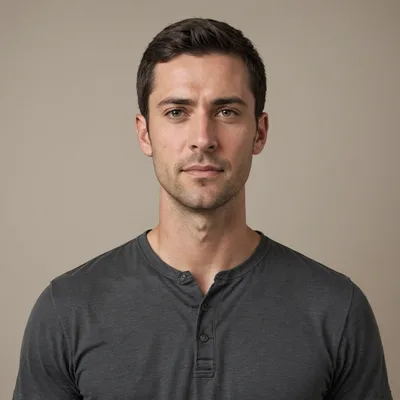
Marcus Chen
Head of Engineering
Previously built NLP pipelines for EHR data at a health informatics company, working on extraction from unstructured clinical notes and discharge summaries. At Enrollvue, focused on the hardest part of the matching problem: making criterion evaluation reliable on free-text that was written for clinical documentation, not for structured parsing.
How we think about clinical trial software
Specificity over breadth
We match patients to protocols. We do not try to manage your trial, replace your CRAs, or become your data warehouse. The narrower the scope, the better we do it.
Evidence, not scores
Every match cites the clinical note text that triggered it. A coordinator reviewing a flagged candidate can read the exact evidence. A PI signing off on eligibility can verify it. No algorithm score without a source.
Site-first design
Coordinators use this tool, not just the CRO managers who procure it. If it adds friction to a coordinator's workflow, we have failed at the thing we are trying to do. Output format, integration burden, and onboarding time are all designed around the person actually doing the review.